

Compression Fittings for RTP/TCP
Why Inner Expansion Matters for TCP
Glass-fiber TCP responds differently to radial forming than many conventional RTP structures. Its reinforcement has limited elongation, which means heavy compression from the outside can transfer concentrated strain through the jacket and into the glass-fiber layers.
Inner expansion moves part of the forming action toward the thermoplastic liner. The machined inner sleeve expands into the pipe wall, creating mechanical engagement without requiring the outer sleeve to carry the full deformation.
The amount of external compression and internal expansion can then be set around the pipe construction, rather than applying the same forming method to every composite pipe.
Available Connection Forms
Different termination and inline forms are available for valves, steel pipework, equipment interfaces and straight pipe-to-pipe connections. The pipe-side sleeve is machined around the required connection and forming method.
Flanged End Fitting
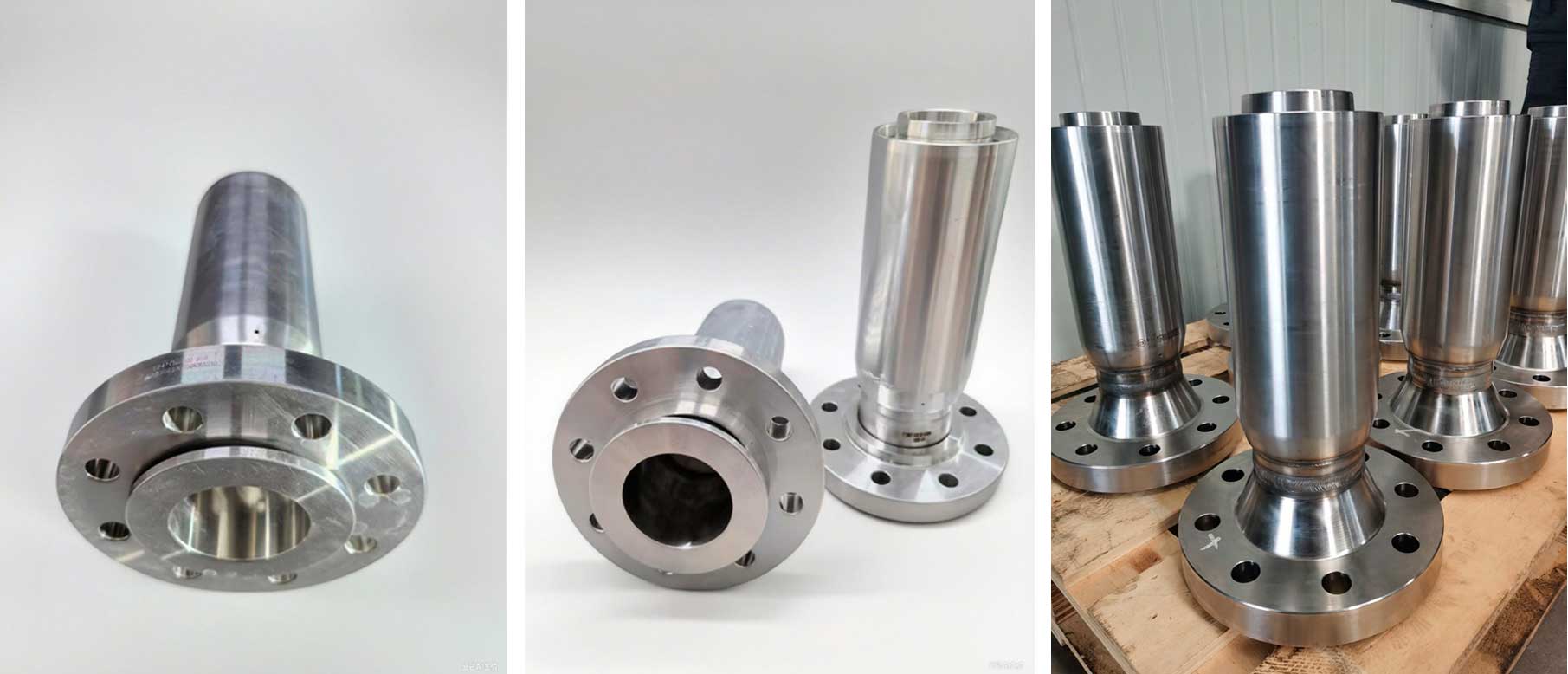
The flanged end fitting combines a long pipe gripping sleeve with a bolted flange interface. It can connect composite pipe to valves, manifolds or adjoining flanged pipework while keeping the pipe-side forming section separate from the equipment connection.
Midline Pipe-to-Pipe Connector
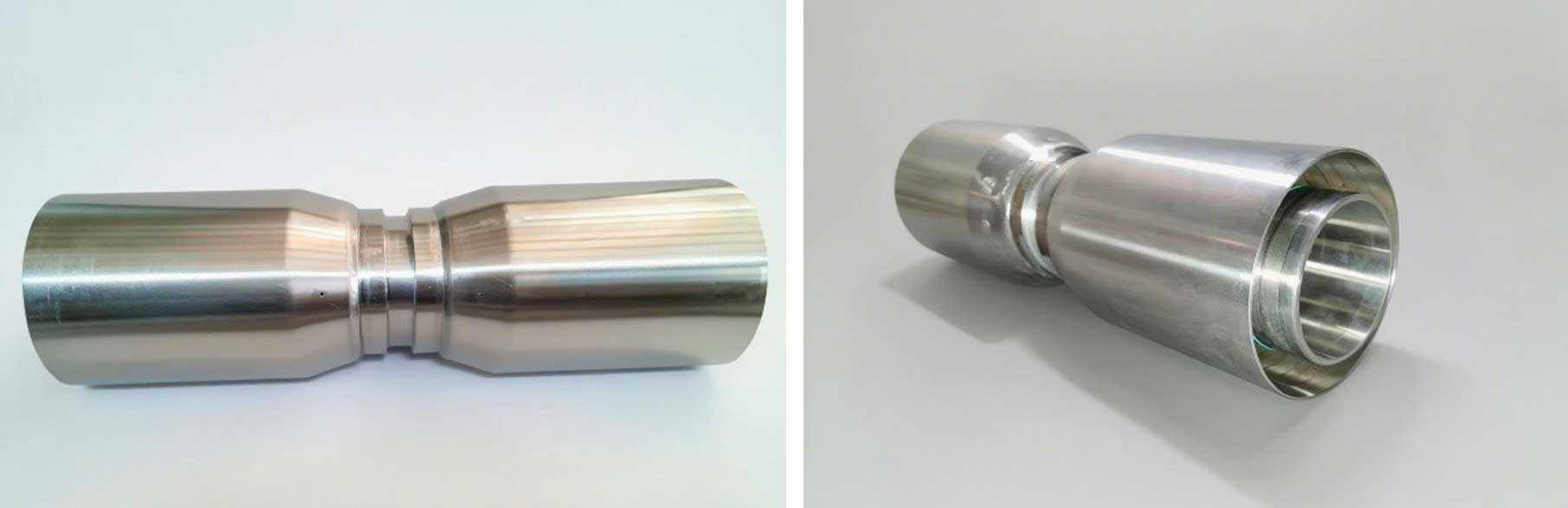
The midline connector joins two pipe sections through opposing gripping sleeves. Its compact central body keeps both connection zones within one fitting, avoiding a separate flange assembly along a straight pipe run.
Welding-Neck Connector
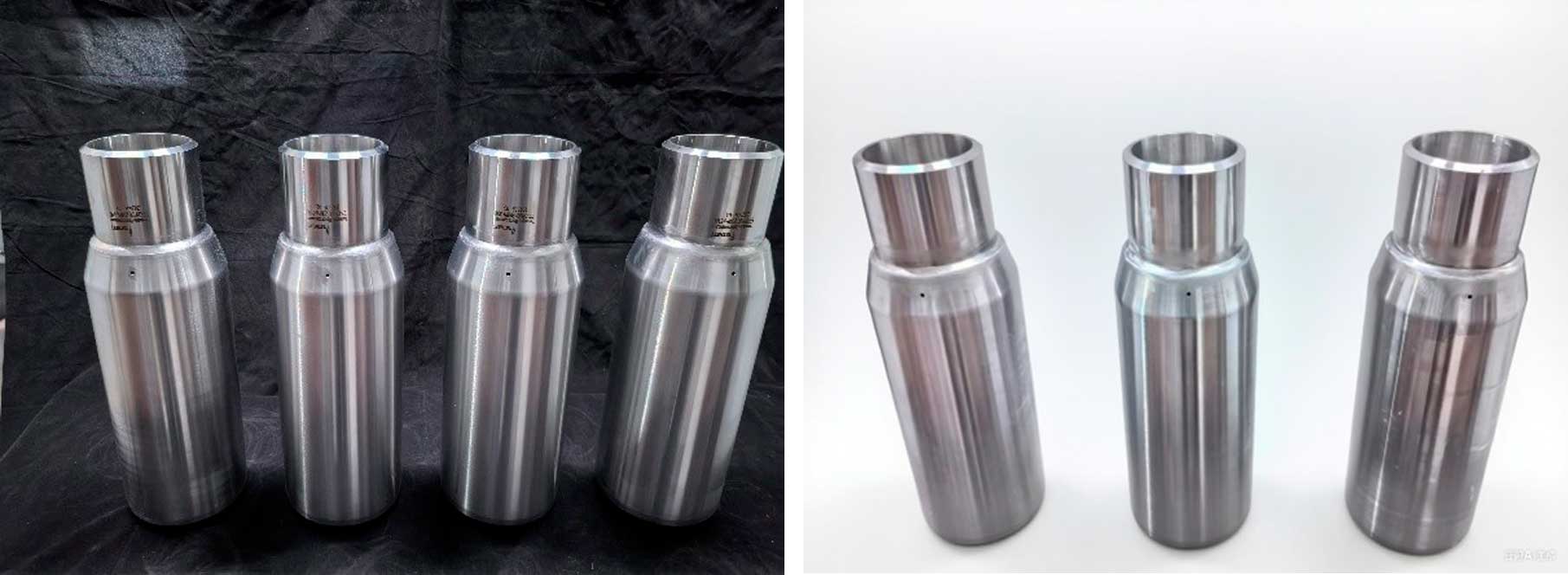
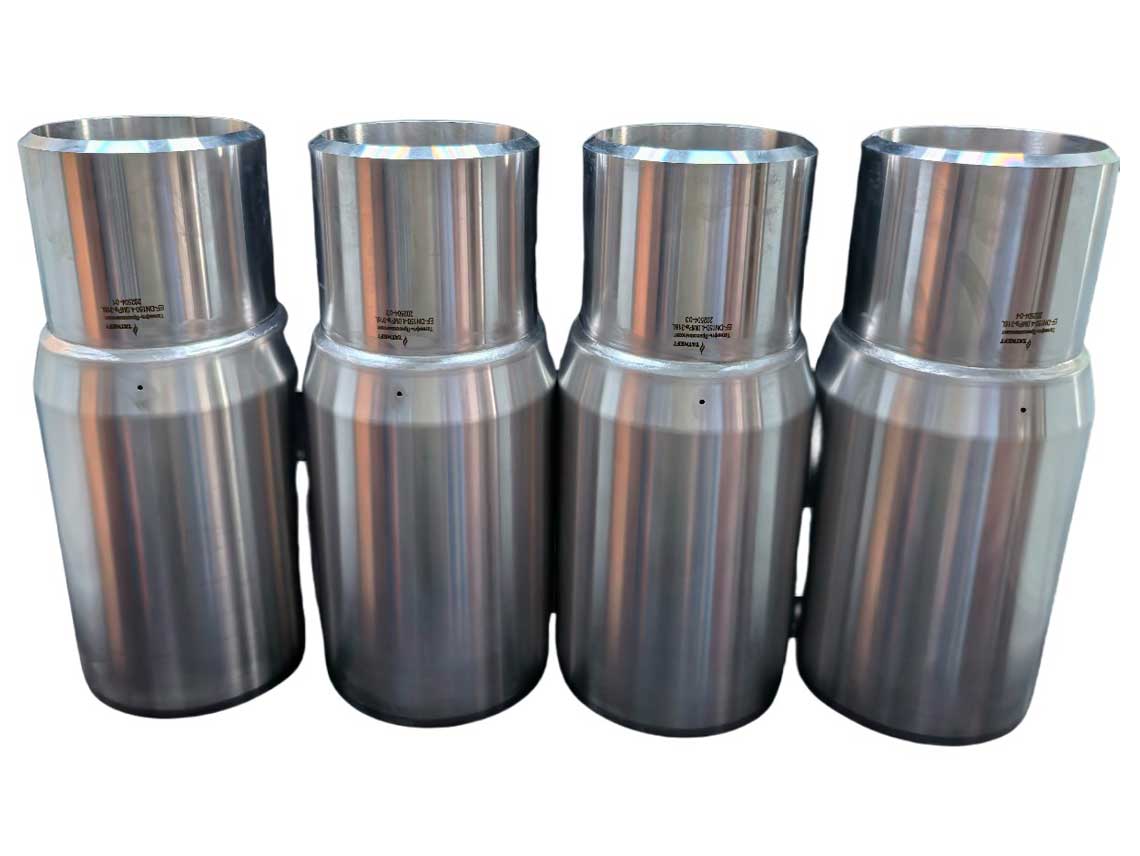
The welding-neck version provides a transition between composite pipe and welded steel pipework. The wider sleeve receives the composite pipe, while the narrower metal neck remains available for the adjoining welded connection.
Threaded Midline Connector
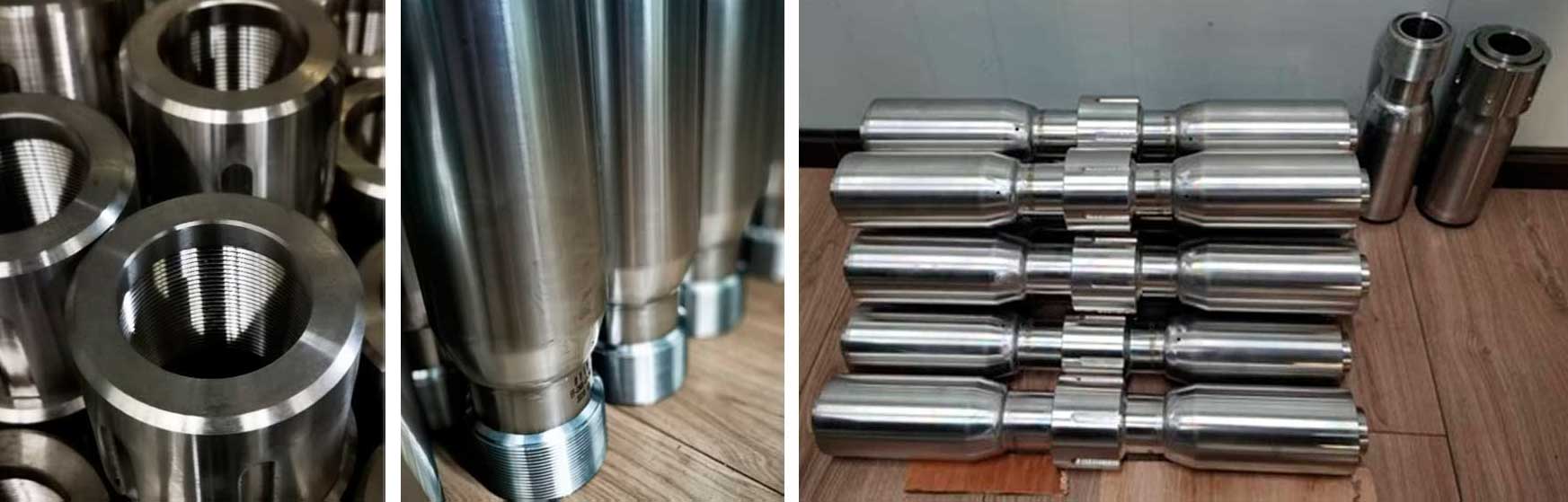
Threaded configurations provide a screw interface for equipment or adjoining pipework without changing the pipe gripping section. Internal or external threads can be machined according to the required connection form.
Carbon Steel Fittings for Joint Testing
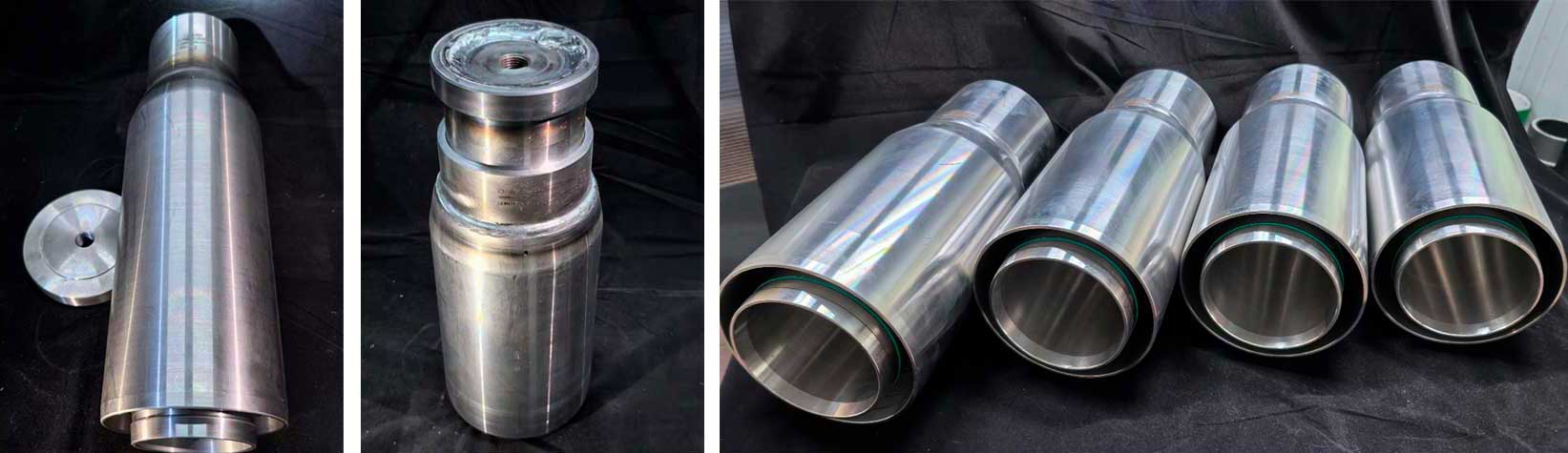
Carbon steel fitting samples can be prepared for connection trials and qualification work. Internal bore, sleeve profile and contact length can be adjusted around the pipe structure being evaluated.
Fitting Geometry Follows the Pipe Wall
Nominal diameter does not define the complete connection. Pipes with the same outside size can have different liner thicknesses, reinforcement layouts and outer jackets, which changes how the fitting should contact the wall.
Sleeve diameter, gripping length and forming direction are selected against the actual construction. Glass-fiber TCP may require more deformation to be introduced from the inner sleeve, while other RTP structures can accept a different balance of internal support and external compression.
Changes to the pipe wall can require changes to the fitting profile even when the nominal pipe size remains the same.
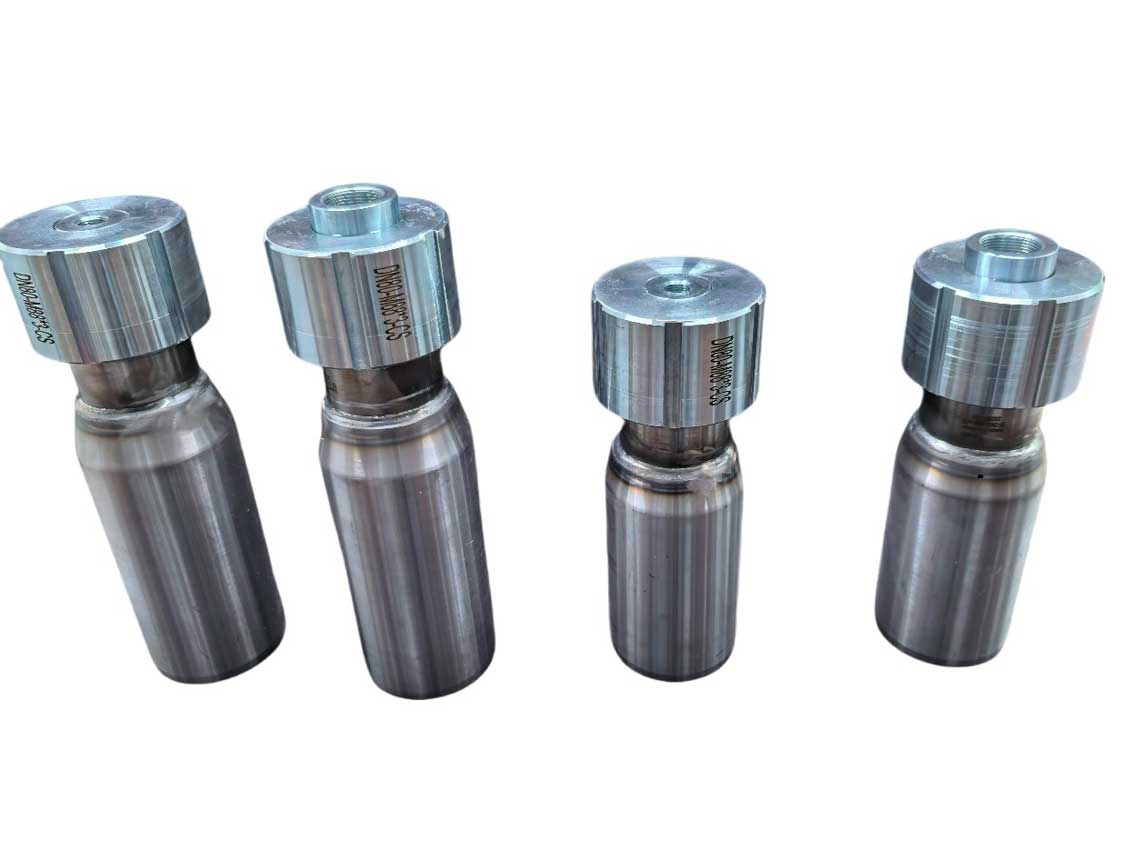
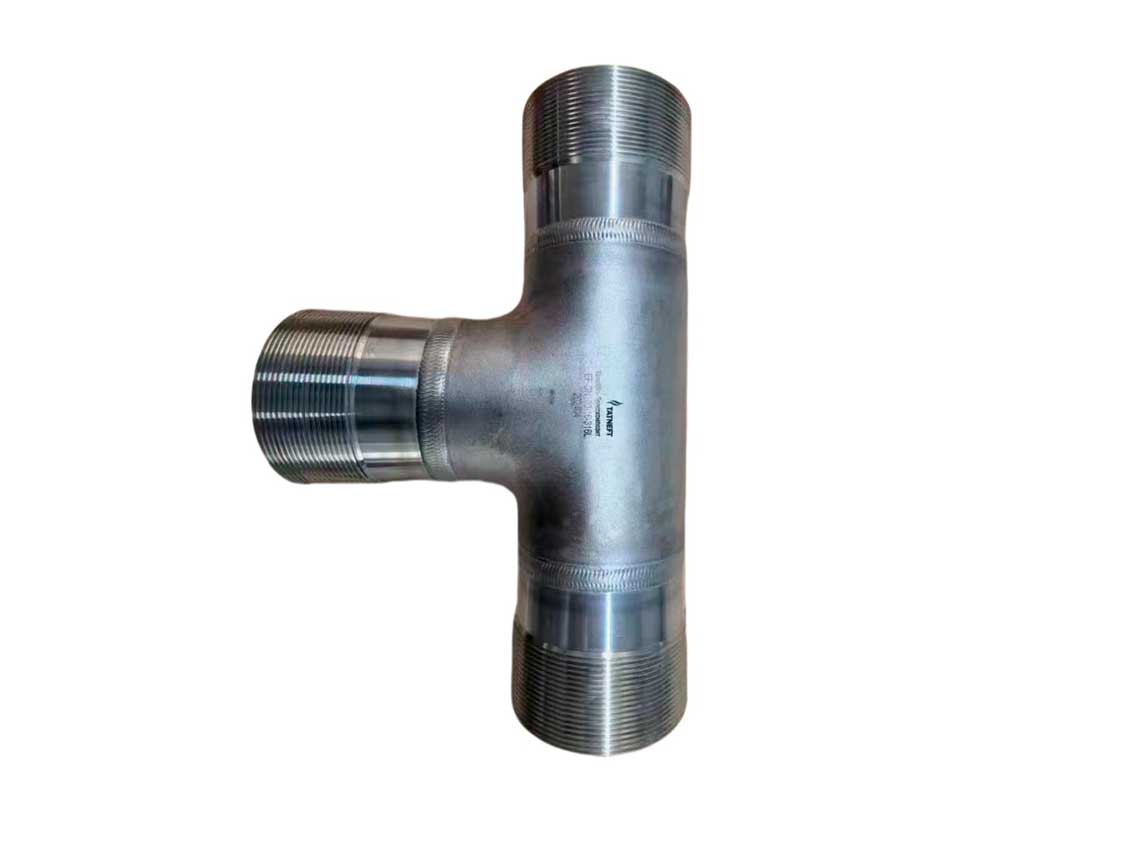
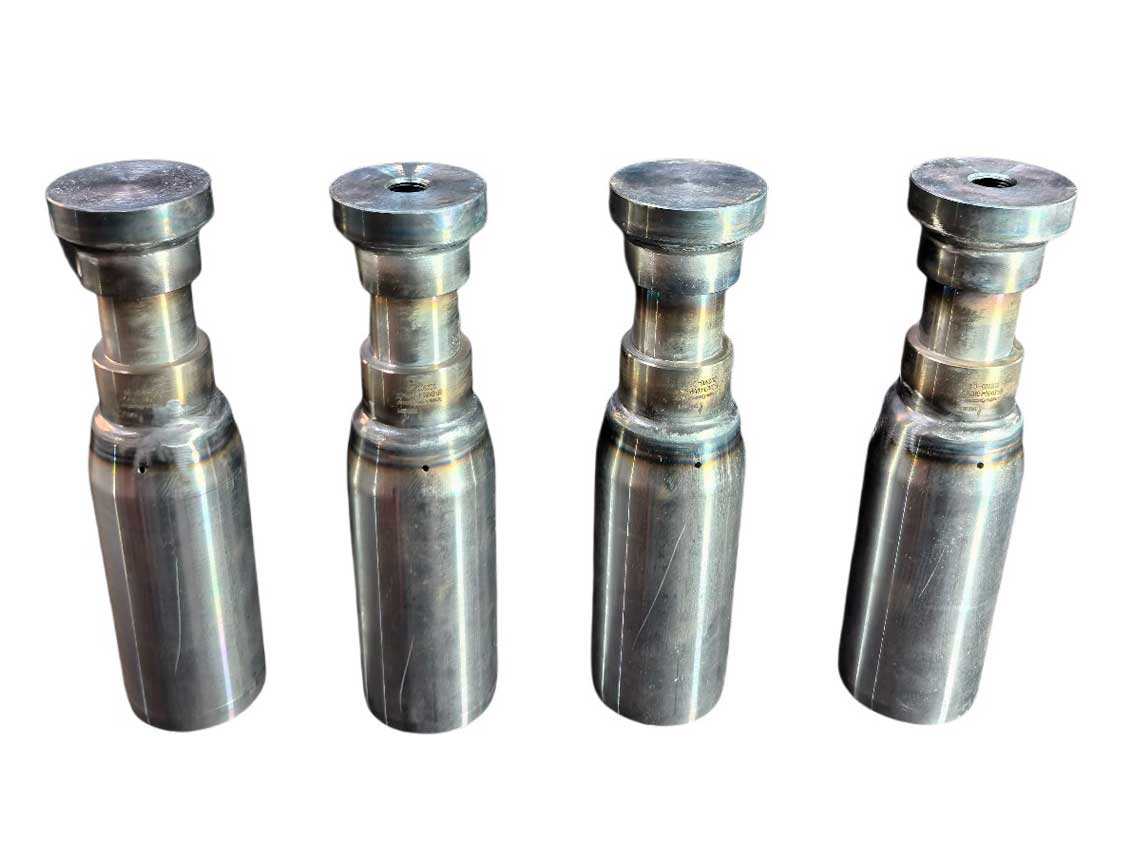
Machined Fitting
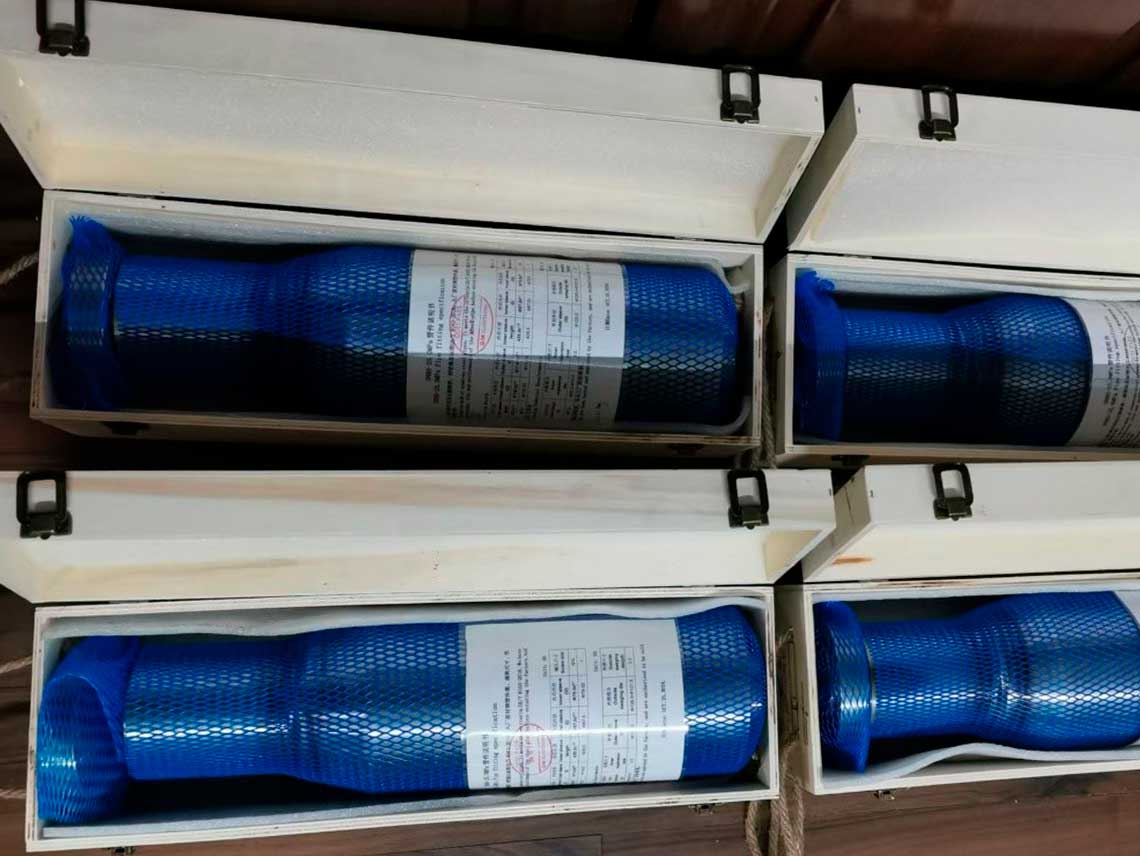
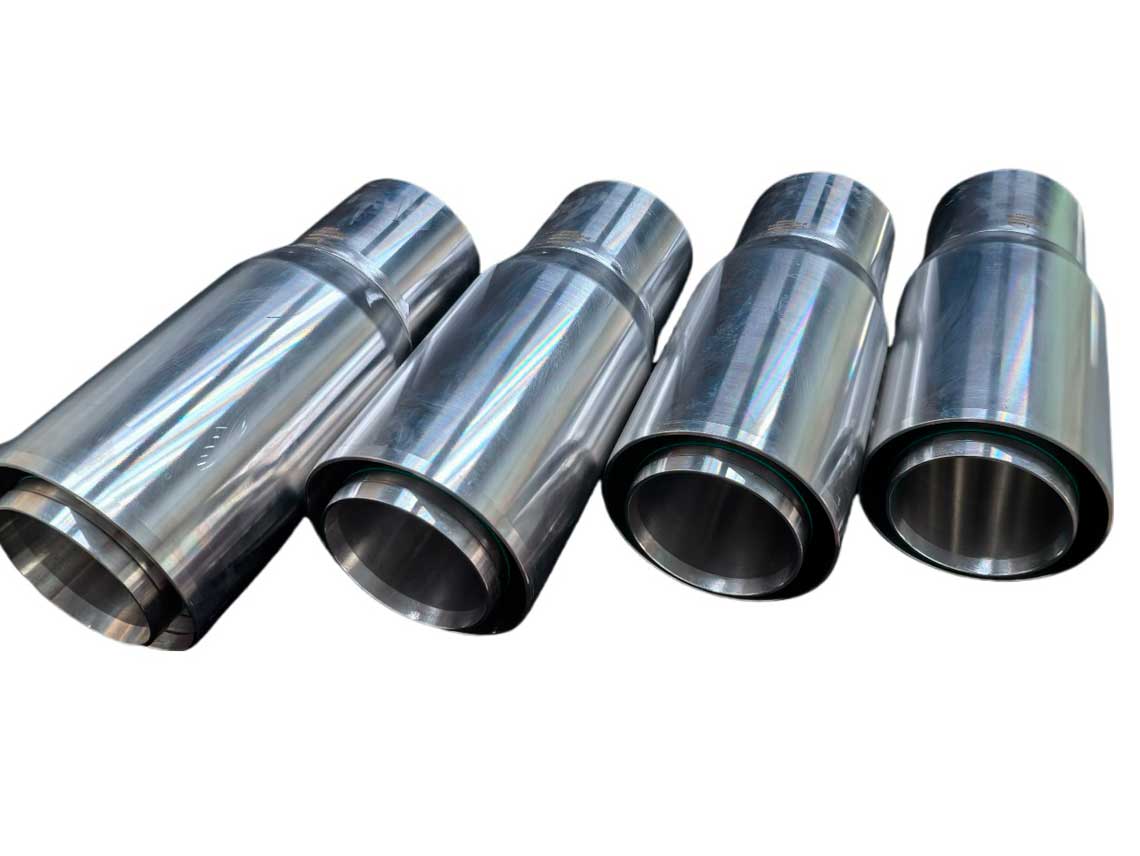
The fittings below show additional machined forms, shipment preparation and connection samples produced for different pipe and test requirements. Body shape and end geometry vary with the intended interface and assembly method.
Forming the Finished Joint
Connection quality depends on the machined fitting and the forming process working together. Pipe-end preparation and concentric positioning help keep contact even around the circumference before compression or inner expansion begins.
Forming travel should match the selected pipe-and-fitting combination. Too little movement can leave limited mechanical engagement, while excessive deformation can place unnecessary strain on the liner or reinforcement.
Crimping, swaging or inner-expansion tooling can be selected once the required joint geometry has been confirmed.