

Electric fusion for RTP Pipe
Electrofusion Around a Reinforced Pipe Wall
Reinforcement built into a polyethylene pipe changes the condition at the cut end. Steel wire or fiber passing through the wall interrupts the continuous PE surface normally used for butt fusion.
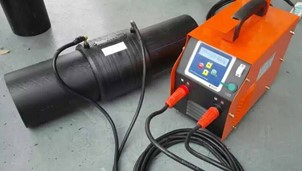
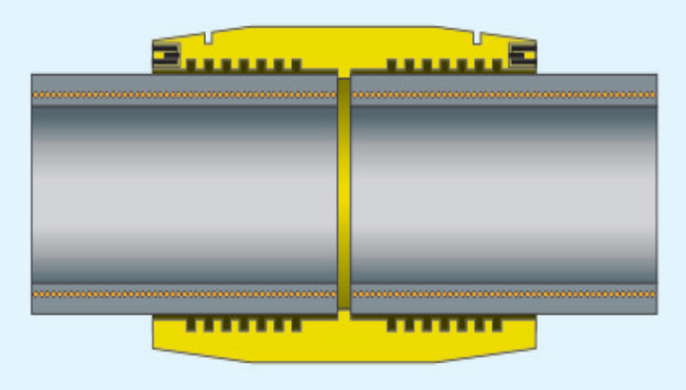
Electrofusion moves the joining area to the outside of the pipe. The prepared pipe end sits inside the fitting, while resistance wire embedded in the fitting heats the surrounding polyethylene surfaces.
The reinforced layer remains within the pipe wall as the joint forms around it, allowing the connection to be made without relying on direct fusion across the exposed reinforcement.
The Heating Zone Sits Inside the Fitting
Resistance wire is positioned around the fitting’s fusion area. When current is applied, heat develops where the fitting and pipe surfaces meet.
Fitting diameter and coil layout affect the heating requirement, while pipe preparation and insertion depth determine how evenly the surfaces contact each other before the welding cycle starts.
Cooling completes the joint after the electrical cycle has finished.
Fitting Range From DN50 to DN1200
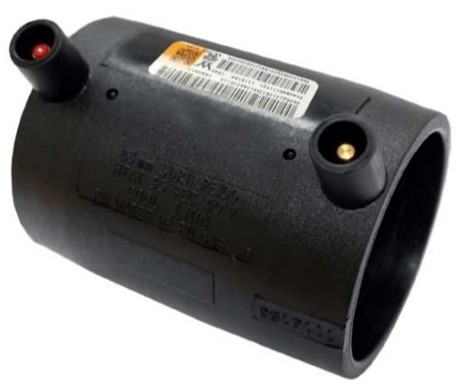
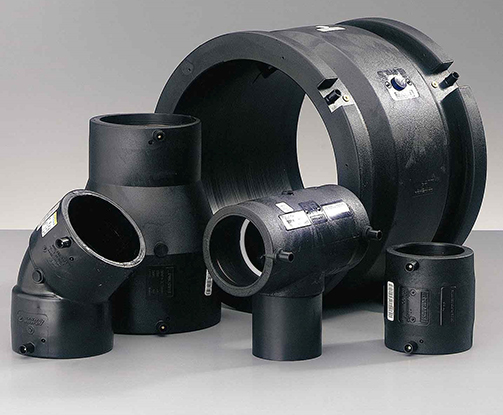
Goldstone supplies electrofusion fittings from DN50 to DN1200 for reinforced polyethylene piping. The range includes straight connection sleeves together with molded forms for directional changes, branches and pipe-size transitions.
Connection geometry changes with the pipeline layout and diameter. Smaller molded fittings suit compact elbows and branches, while large-diameter couplers use broader bodies and larger fusion areas around the pipe.
The fitting is selected around the actual pipe size and connection form rather than treated as one standard sleeve across the full diameter range.
Connection Forms in the Current Range
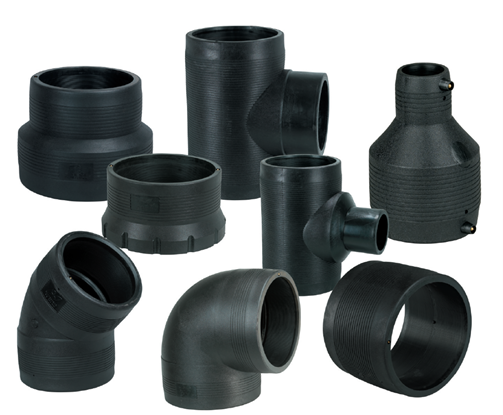
The current product range covers straight couplers, elbows, branch fittings, reducers and other molded forms used across different reinforced PE pipeline layouts.
Different body shapes allow the connection method to continue through straight runs, changes in direction and diameter transitions without relying on one fitting geometry.
Different Sizes, Different Fitting Bodies
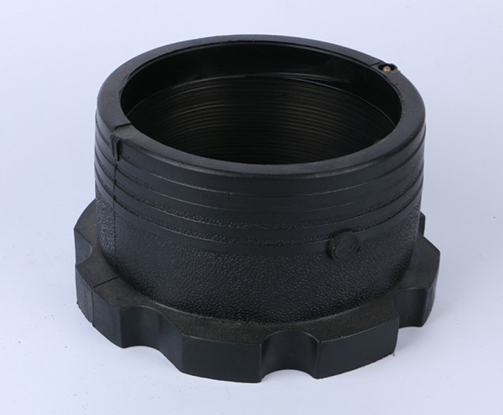
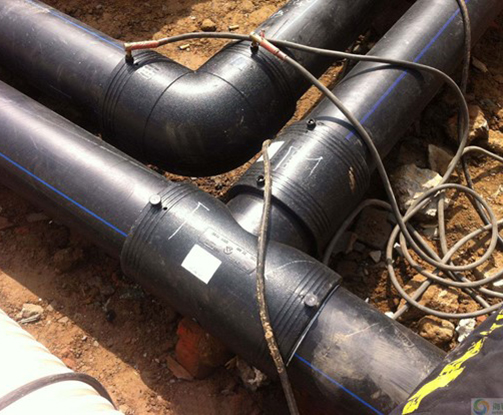
Moving from DN50 to DN1200 changes more than the fitting diameter. Larger pipe sections need wider fusion areas, larger fitting bodies and different handling considerations around the connection.
Compact molded components work well for smaller elbows, branches and reducers. Large couplers use a broader sleeve structure to surround the increased pipe circumference and provide enough fusion area for the joint.
The images above show this range clearly, from small molded fittings to substantially larger connection pieces.
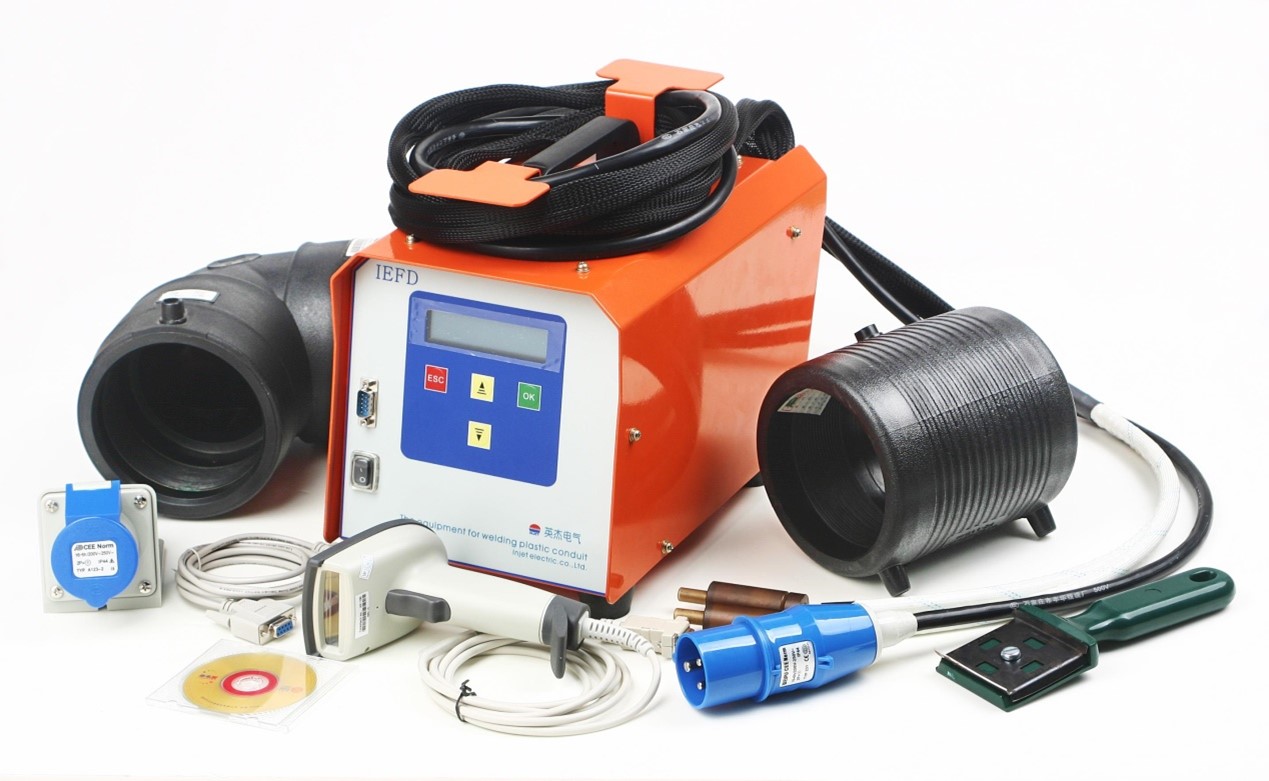
IEFD Electrofusion Welder
IEFD welding units are supplied for PE pipe and fitting connections where controlled electrical output is required during the fusion cycle.
RMS control manages the electrical output delivered to the fitting, while the connection cables link the unit directly to the fitting terminals. Welding parameters can be set according to the selected fitting and pipe combination.
The equipment can be supplied together with the fitting range where the project requires both connection components and welding hardware from the same source.
Fittings and Welding Equipment for One Project
Pipe size, required connection forms and welding equipment can be reviewed together before supply. This is particularly useful where one pipeline includes several fitting diameters or molded connection types.
Goldstone can prepare the fitting scope around the project layout and include IEFD welding equipment where required.